
Looking Back at Genshin Impact's 1.1 Update That Defined Its Early Legacy
Genshin Impact 1.1 update and A New Star Approaches brought iconic characters, pivotal story arcs, and set a new standard for live-service games.
In the fast‑evolving world of live‑service games, certain updates stand out as turning points. For Genshin Impact, the 1.1 version – titled “A New Star Approaches” – was exactly that. Although it arrived back in November 2020, its impact is still felt in the community and design philosophy of the game as we know it in 2026. The update didn't just add characters or quests; it reshaped how players engaged with the sprawling land of Teyvat and set the tone for years of content to come.
As a moment of reflection, it's worth revisiting what made this patch so monumental, how it established a cadence for seasonal events, and why the additions still resonate with long‑time Travelers today.
Expanding the Roster with Iconic Faces
The 1.1 update introduced four playable characters, but two of them have become legendary within the community. Childe, a 5‑star Hydro archer, was the first character to boast a dual‑stance mechanic, allowing him to fluidly switch between ranged bow attacks and a deadly melee Hydro‑blade form. This dynamic playstyle not only refreshed combat but also demonstrated miHoYo’s willingness to break conventional archetype molds. Alongside him, Zhongli arrived as a 5‑star Geo polearm user, initially underpowered but later buffed into one of the most essential support units. His ability to petrify enemies with his devastating Planet Befall burst, coupled with an unbreakable shield, made him a cornerstone of countless team compositions.
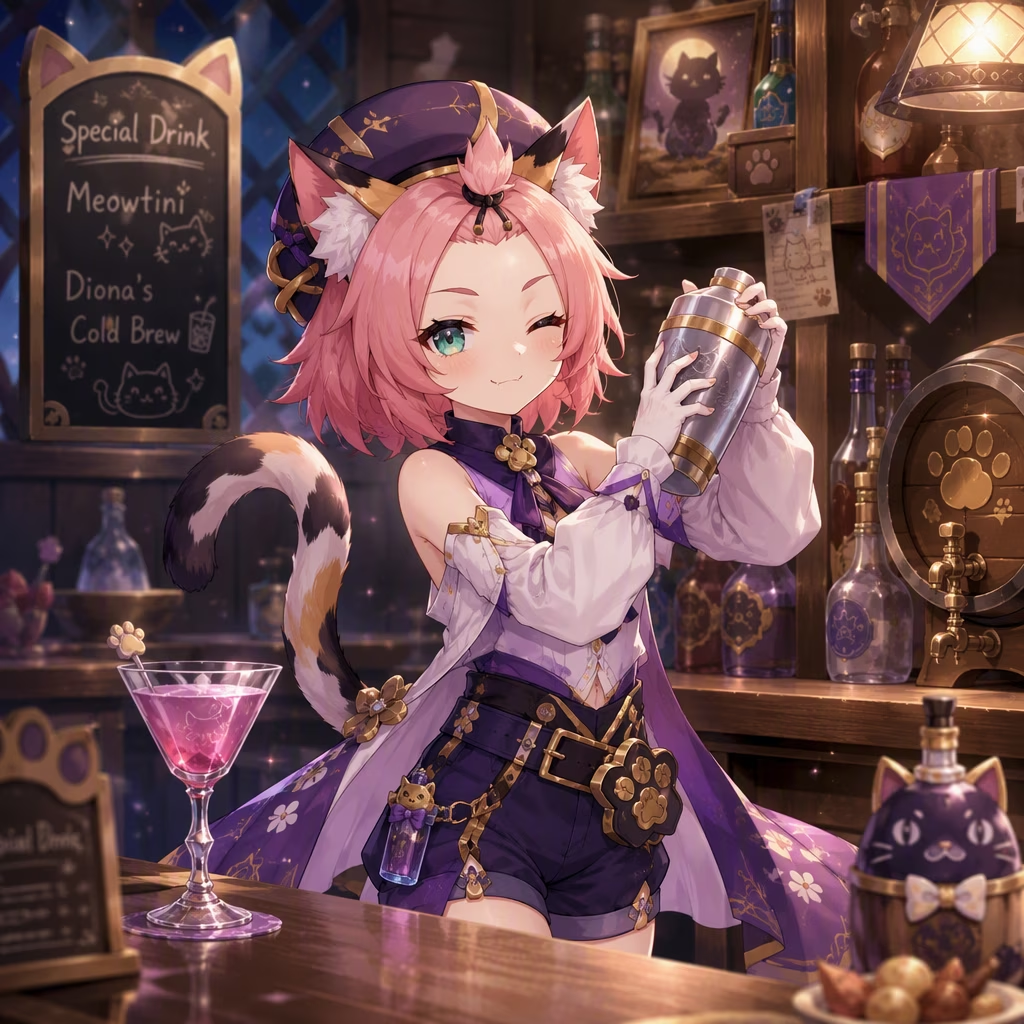
Rounding out the new faces were two 4‑star characters: Xinyan, a Pyro claymore wielder who brought a rock‑and‑roll spirit and physical damage synergy, and Diona, a Cryo bow‑using bartender whose shields and healing cemented her role as a versatile support. These four characters didn't just expand roster variety; they introduced “more effective elemental combos and combat strategies,” as the developers emphasized, encouraging players to experiment with new team dynamics.
The Liyue Chapter's Grand Finale
Perhaps the most narrative‑driven portion of the update was the conclusion of the main Liyue storyline. The 1.1 patch added three full acts of quests that tied up the geopolitical intrigue surrounding the Geo Archon and the ancient god Osial. This climactic finale not only showcased the game's growing cinematic ambitions but also deepened player investment in the lore. Producer and then‑CEO Hugh Tsai noted that beyond the main story, more character‑specific side quests would be added, a promise that has since become a staple of each patch cycle, fleshing out even 4‑star heroes.
The First Seasonal Event: Unreconciled Stars
Before Genshin Impact turned seasonal events into a regular drumbeat, there was Unreconciled Stars. This two‑week event called on all players to fight back against a sudden, terrible catastrophe threatening Teyvat. It wasn’t just a combat gauntlet; it offered a dedicated storyline, co‑op challenges that pushed for teamwork, and generous rewards, including the 4‑star character Fischl for free. This structure—narrative event, cooperative gameplay, and earnable characters—became the blueprint for every subsequent flagship event, from Lantern Rite to Windblume. Looking back, Unreconciled Stars proved that live‑service storytelling could coexist with rewarding gameplay loops.
Reputation System: Regional Pride and Rewards
Another system debut in 1.1 that has aged gracefully was the Reputation system. Each of the game’s cities—Mondstadt and Liyue at the time—now offered a separate rating that grew as players completed bounties, requests, and exploration objectives. Building Reputation unlocked region‑exclusive rewards such as custom gliders, recipes, and new gadgets. This gave adventurers a reason to revisit older areas and engendered a sense of civic pride. Even now, with the addition of more regions like Sumeru and Fontaine, the Reputation framework remains intact, a testament to its solid foundation.
Pioneering New Tools and Quality‑of‑Life
The 1.1 update packed a suite of new tools that significantly eased exploration. A portable waypoint allowed players to set custom fast‑travel markers anywhere for a week, solving the frustration of long treks. The portable stove enabled cooking on the go, and treasure compasses helped hunt down hidden chests. Oculus resonance stones eliminated the guesswork in locating Anemoculi and Geoculi, while the Wind Catcher let travelers store anemograna to create on‑demand wind currents—a boon for climbing and gliding.
These quality‑of‑life items were not just novelties; they showed the development team listening to feedback about open‑world friction. Over the years, miHoYo has continued this tradition, iterating on gadgets to keep exploration fresh and convenient.
A Cameo That Bridged Players and Developers
One lighter addition that still brings smiles was the special monster, the Forrest Hilichurl. Designed as an in‑game cameo of then‑company president Forrest Liu, this unusual Hilichurl served as a punching bag for frustrated players. Hugh Tsai humorously invited players to “seek out this most unusual Hilichurl and vent all of your frustrations on him with my blessing.” It was a charming, self‑aware gesture that humanized the developers and reinforced the community feedback loop. Even today, the Forrest Hilichurl reappears in anniversary celebrations, a nostalgic nod to that early camaraderie.
Console Generation Expansion
Alongside content, miHoYo confirmed that Genshin Impact would be fully playable on the PlayStation 5 via backward compatibility, promising “improved graphics and faster load times.” This early commitment to cross‑generational play ensured that the game’s visuals could scale, and by 2026, we’ve seen native PS5 versions and support for newer hardware, a journey that began with the 1.1 announcement.
Why 1.1 Still Matters in 2026
Genshin Impact has since traversed entire new nations, introduced Dendro reactions, and evolved into a cultural phenomenon beyond gaming. Yet the 1.1 update remains a touchstone because it validated the game’s live‑service model. The dual‑character banner structure (first seen here), the mix of free and premium content, the elaborate seasonal events, and the relentless polish all became hallmarks that competitors strive to emulate.
For current players revisiting Liyue or collecting older characters such as Childe’s repeated reruns, the DNA of “A New Star Approaches” is everywhere. It’s a reminder that great live‑service games are built patch by patch, and sometimes, a single update lays the groundwork for a legacy that lasts well into the future.