
Sprucing Up Your Serenitea Pot: A Complete Guide to Indoor Decor
Master Genshin Impact mansion decoration with essential ornaments and remodeling tips to transform your home into a personalized Teyvat retreat.
When a player first steps into their mansion in Genshin Impact, it feels like a vast, empty canvas. Making the inside of that space truly pop is a little bit more complicated than just placing down sofas. It’s not about filling every corner, but about finding the right type of decorations and ornaments to accent the new home. While the initial selection felt a bit limited back in 2021, the system has blossomed dramatically by 2026, with Tubby’s catalog now overflowing with options from every corner of Teyvat. Anyone who wants to get the most out of their home will need to think like a designer, and that starts with understanding exactly what goes where.
Most travelers know that slapping down a few chairs isn’t going to cut it. The real magic lies in the details—the ornaments that sit gracefully on a tabletop, the wall decor that erases an awkward empty space, and the subtle shift of a ceiling lamp that changes a room's entire atmosphere. A design consultant from the Themer team might say it’s about layering, and they’re right. A massive bookshelf anchors the floor, sure, but it’s the little porcelain tea set resting on it that brings the whole room together. Hardworking chubby birds and floating spirits from across the sea have made sure that by 2026, there’s no shortage of these small treasures to collect.
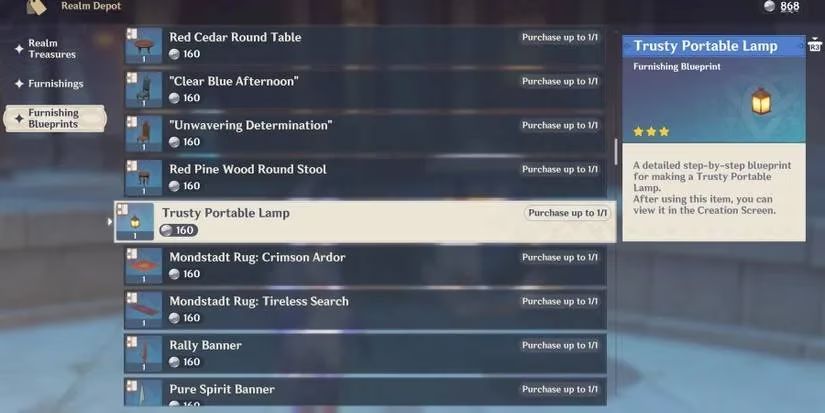
Decorations serve as the structural redesign of a room’s shell: the floors, the walls, even the ceiling patterns. They might not be as flashy as a legendary vase, but swapping out a bland Moridian floor for a Luminescent Pine motif instantly shifts the architectural vibe. All these remodeling blueprints were originally available directly from Tubby’s Realm Depot for 160 realm currency apiece. A lot of players skip them in favor of shiny objects, but a professional interior builder knows a warm floor boundary prevents that "warehouse echo" feeling. It’s a low-cost way to simulate a completely different mansion without moving a single wall.
To keep a design plan coherent, planners often track stats. A sparkling new decoration looks great, but if its load cost is monstrous, it might force the removal of three carefully placed lamps. Here’s a look at some fundamental remodels and their Adeptal Energy contributions before the Inazuma expansion redefined the market:
-
Door-Screen 'Forest of the Elements' – Gold, essentially a heavy room divider, often crafted with sturdy fabrics.
-
'Mondstadt' Flooring – A breezy, soft-toned wood that instantly brightens storage lofts.
-
'Liyue' Style Ceiling – Tasseled fabric panels that draw the eye upward, perfect for making low libraries feel taller.
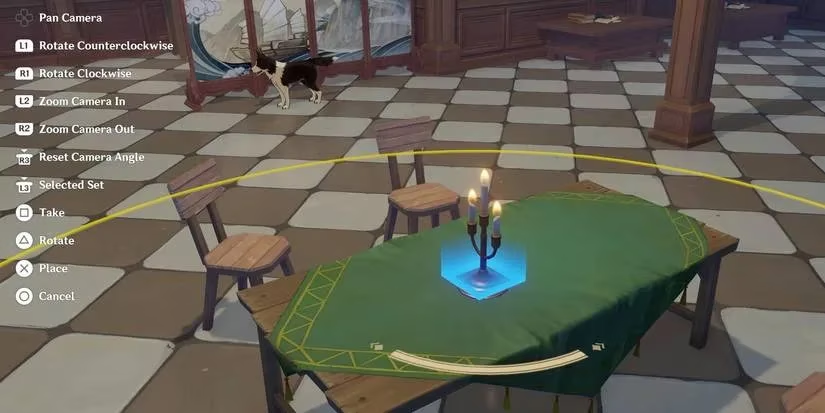
When it comes to the actual objects sitting on flat surfaces, ornaments are the tangible trinkets that prove a traveler actually lives in a space. They can be placed on top of tables, shelves, or cabinets, and most of the classic selection still costs 160 Realm Currency. The hidden load cost is the real catch here, though; a simple teacup set uses very little, but a complex interactive clock can gobble up a room’s budget in seconds. A detailed breakdown of a few classics reveals the balance of economics and aesthetics:
| Blueprint Name | Origin / Availability | Crafting Materials | Adeptal Energy | Load Cost |
|---|---|---|---|---|
| Tea Wisp-Clouded White Couch | Standard Realm Depot | Placeholder Materials (Fabric, Dyes) | Medium (lower tier) | High |
| Rock Sculpture: 'Pacifier' | Inazuma Update Blueprint | Placeholder Materials (Stone, Iron) | High | Low |
| Flower Arrangement: 'Verdant' | Standard Realm Depot | Placeholder Materials (Plants, Soil) | Medium | Medium |
| Traveler's Mini Stove | Vendor / Quest Reward | Placeholder Materials (Metal, Fuel) | Low | Low |
The arrival of Inazuma shook up the meta considerably. It wasn’t just about Liyue elegance anymore; suddenly grit and rustic charm entered the chat, and players who’d been coasting on a single aesthetic had to completely rethink their clutter layouts.
Blank walls are the enemy of immersion. Wall decor blueprints are the cheapest way to fix this, mostly picking up for just 80 realm currency at the depot, though the high-end artwork pieces are tied to Adeptal Mirror task milestones. These aren't just stuffy paintings either; hanging scrolls, mounted stag horns, and glowing sigil panels adhere strictly to wall snap points and help zone different areas of a large hall. A long dining table looks completely wrong without a lantern sconce looming over it, and a reading nook demands a framed map.
A pair of special murals, Replica Mural: Ancient Ritual in a Sea of Fog and Replica Mural: Lone Peak in a Sea of Fog, actually drop from a specific Inazuma questline, "The Saga of Mr. Forgetful." They’re essentially free lore trophies that separate casual furniture hoarders from true completionists.

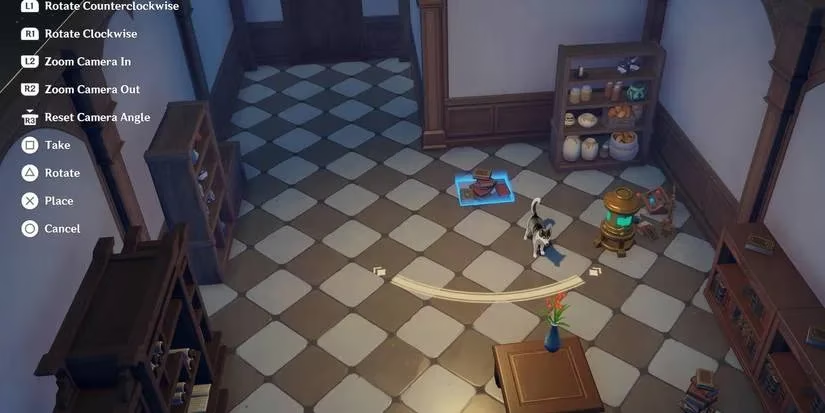
Animals are the ultimate test of load management. Bought from the traveling salesman Chubby for 100 Realm Currency each, dogs and cats absolutely wreck the load counter with a massive cost of 500, so placing them inside must be done with surgical caution. They aren't static statues either—dogs follow the player around like loyal companions inside the mansion, while cats meander off to do their own thing. Someone might carefully position a Jade-Eyed Cat on a cushion, only to find it ignoring the bed entirely ten seconds later. The indoor menagerie that Chubby rotates through has always included some crowd favorites:
-
Black-Back Hound
-
Forest-Patrol Hound
-
Jade-Eyed Cat
-
Northland Cat
-
Northland Hound
-
Sheriff Cat
-
Shiba
-
Tiger-Stripped Cat
It's worth recalling a firm design rule that the developers locked in: strictly outdoor fauna like Forest Boars or Azure Cranes cannot be slipped inside the mansion, no matter how badly a player wants a pet boar hogging the fireplace. Managing that cluttered inventory and juggling high-load companions remains the core challenge of a well-optimized home in 2026.