
Why Genshin Impact’s Gacha System Remains Irresistible in 2026
Genshin Impact's gacha system combines an emotional wish ritual with a strategic pity framework, making character pulls personal and unforgettable.
I still remember the moment I pulled my first five‑star character in Genshin Impact. It was late at night, my heart was hammering, and the screen exploded into golden light. That electrifying blend of hope and sheer luck perfectly captures why, even in 2026, millions of us keep hitting the “Wish” button. Genshin’s gacha system is far more than a monetization mechanic – it is a masterfully engineered emotional loop that turns wish-making into an unforgettable ritual.
At its heart, pulling on a banner feels identical to tearing open a gift. You save Primogems for weeks, sometimes months, and then trade them for a few glorious seconds of uncertainty. The dramatic star animations, the slow reveal of a silhouette, and the accompanying music all tease your senses. Psychologists call this variable‑intermittent reinforcement – you never know when the reward will come, which makes the anticipation almost addictive. In 2026, with over 90 playable characters spanning seven nations, Hoyoverse has refined this moment into an art form. Each wish is a tiny gambit: will I walk away with a C6 Noelle yet again, or will the next Archon finally join my team?
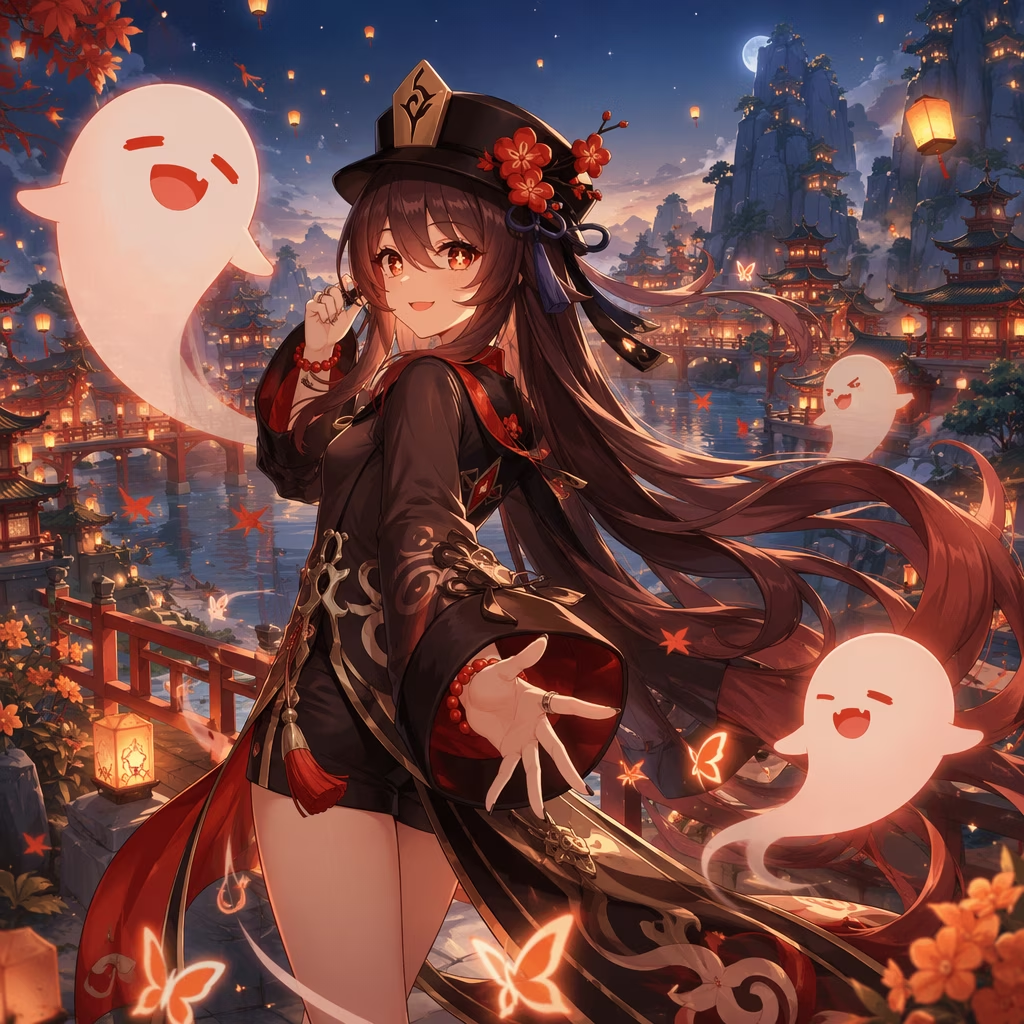
But the gacha hook would be hollow without characters worth chasing. Genshin does not hand us faceless “units”; it delivers personalities like the stoic geo lord Zhongli, the mischievous fireworks expert Yoimiya, or the recently introduced Natlan warrior with her blazing phoenix‑themed attacks. Every five‑star arrives with a story quest, unique idle animations, and a playstyle that often reshapes the meta. Long before their banners drop, I am already invested. I have laughed during their cameos in events, argued over their best artifact sets on Discord, and maybe even shed a tear during an archon quest. So when the banner finally lights up, pulling that character stops being about stats – it becomes personal.
Of course, pure randomness would be brutal. What makes Genshin’s system brilliantly humane is the pity framework. The hard pity at 90 wishes guarantees a five‑star, while soft pity kicks in around 75 wishes, steadily increasing your odds with each pull. The infamous 50/50 – where your first five‑star has only a 50% chance of being the featured character – adds a dash of drama, but losing once means the next five‑star is absolutely guaranteed to be the banner’s star. This safety net transforms gacha from blind gambling into a planning challenge. I have spent many late nights charting out if my Primogem stash could survive both a Raiden Shogun rerun and the looming Hydro Archon debut. It is budgeting, but with far prettier spreadsheets.
This strategic layer turns resource management into a meta‑game. High‑level f2p (free‑to‑play) players treat daily commissions, Spiral Abyss resets, and limited‑time events as income streams. Watching your Primogem counter climb from a few hundred to over 14,400 – the number needed for a guaranteed five‑star through the Starglitter shop’s intertwined fate bundle – delivers a genuine sense of accomplishment. In 2026, Hoyoverse regularly sprinkles in free four‑star characters and generous anniversary rewards, so even unlucky streaks feel surmountable.
Hope is the secret fuel. Every time I press “Wish,” logic tells me the odds are slim, but my heart whispers “what if.” That flicker of possibility – the dream of seeing a double five‑star drop, or finally snagging the elusive Kazuha after three reruns – keeps the gacha from ever feeling truly stale. When that golden glow finally appears, the joy is magnified precisely because I had almost given up hope. I have jumped off my couch, screamed into a pillow, and immediately flooded my friends’ DMs with screenshots. That rush is impossible to replicate.
Limited‑time banners amplify everything through FOMO (Fear Of Missing Out). In 2026, banner cycles still run roughly three weeks, and some characters – like the adeptus Xiao before his fourth rerun – can go over a year without returning. Knowing that a desired unit might vanish for months creates a thrilling urgency. Social media explodes: Twitter timelines overflow with pull art, Reddit threads dissect “should you pull” scenarios, and TikTok edits romanticize the banner’s soundtrack. The community does not just play Genshin; we experience gacha together. I have celebrated strangers’ lucky pulls and shared consolation memes for those who lost the 50/50. That communal bond softens the sting of bad RNG.
Beyond the emotional rollercoaster, the gacha keeps Teyvat alive. Each new banner often brings a character who introduces a fresh elemental reaction or enables a new team composition. In 2026, the Natlan arc has already introduced characters that redefined burning and overload teams. Even if I cannot pull every banner, the shifting meta encourages me to revisit older four‑stars like Fischl or Xiangling and experiment with unexpected synergies. The game never truly locks me out because Genshin’s world scales beautifully with a core team of well‑invested four‑star characters. I can explore every corner, beat every boss, and enjoy every event without spending a dime.
Ultimately, the gacha is a game within the game. It is a blend of strategy, psychology, and pure spectacle that gets me emotionally involved long before I even enter my credit card details. Yes, the system can be cruel. I have felt the bitterness of a Qiqi constellation when I desperately wanted the featured character. But across 2026, I have also learned that those lows make the eventual highs brighter. Genshin’s gacha is not perfect, but it is precisely this mix of unpredictability, guarantee, and shared storytelling that keeps me logging in day after day.
So the next time those golden stars swirl across your screen, remember: you are not just watching a random number generator decide your fate. You are living the beating heart of the Genshin Impact experience – one wish at a time.